Every hard countertop material follows the same path: cabinets in and levelled, digital template taken, slab cut and edged in a shop, installed in a single day. What differs between a good job and a poor one is where the seams go and how flat the cabinets were when the template was taken.
We install quartz, granite, marble, porcelain slab, solid surface and butcher block across Vancouver and the region — on our own renovations and as a standalone job on kitchens we are not otherwise touching.
How does countertop installation work?
Cabinets are installed and levelled first. A technician then takes a digital laser template of the actual cabinet run — not the drawings. The slab is cut, edged and polished in a local shop over 8 to 12 working days, then installed in a single day with the sink and tap connected the same afternoon.
Cabinets levelled and final
Nothing can be templated until the boxes are installed, shimmed and fixed. This is why cabinetry sits on the critical path.
PrerequisiteDigital template
Laser template of the real run, with overhangs, cutouts and the sink model confirmed on site.
1–2 hoursSeam and layout approval
You see where the seams will fall and, on a figured stone, which part of the slab each piece comes from.
1–2 daysFabrication
Cut, edged, polished and cutouts made in a local shop.
8–12 working daysInstallation
Old tops out, new tops set, levelled, seamed, sink and tap connected, silicone finished.
1 dayHow long will I be without a countertop?
Eight to twelve working days between templating and installation. That is the longest single gap in a kitchen renovation and it cannot be compressed — the slab is being cut to your kitchen’s exact measurements during it.
Because the sink cannot be connected until the counter is in, this is also the stretch with no running water in the kitchen. It is the main reason we set up a temporary kitchen on day one rather than partway through.
Some fabricators offer a rush service at a 15 to 25% premium that brings it to four or five days. Worth it occasionally — a house going on the market, a family event — and rarely otherwise.
Where seams go, and why it matters
Seams are unavoidable on runs longer than a slab, typically over about 3,000 mm. A well-placed seam sits at a sink cutout, at an inside corner or where a cooktop breaks the run. A badly placed one sits in open counter where the eye lands.
On a figured stone the seam is also a pattern decision. Veining that runs across a joint looks deliberate; veining that stops dead and restarts at a different angle looks like a mistake. That is agreed before cutting, not discovered afterwards.
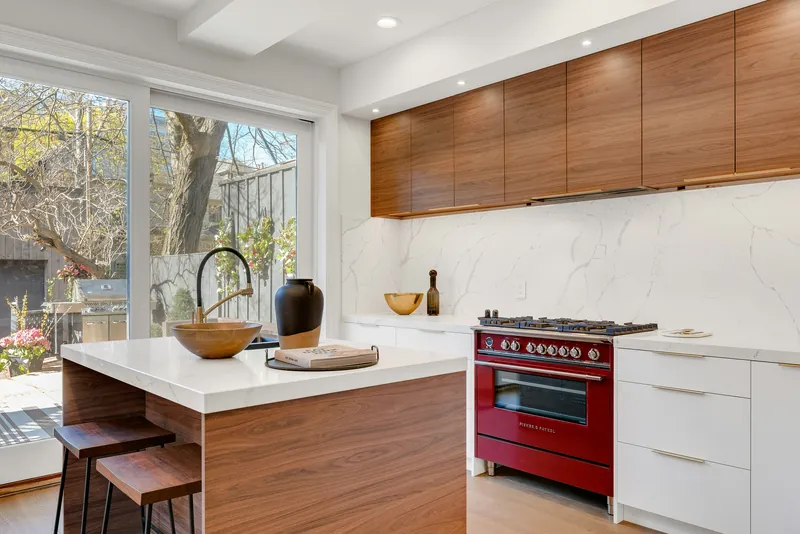
Islands are the common failure point. An island longer than a slab needs a seam, and on an island there is nowhere to hide it — which is one of the reasons a large island in a single piece of stone costs disproportionately more.
- Seams placed at sink or cooktop cutouts where the run is already broken
- Veining matched across the seam on a figured stone
- Colour-matched epoxy, tooled flush — you should feel it before you see it
- Overhangs over 300 mm supported with steel brackets, not corbels alone
- Cutouts made in the shop under water, not with a grinder on site
Which material for which kitchen
| Material | Installed (CAD/sq ft) | Maintenance | Best for |
|---|---|---|---|
| Quartz | $80 – $150 | Wipe clean; never sealed | Almost every family kitchen |
| Granite | $85 – $160 | Seal every 1–3 years | Unique stone; hot pans set down directly |
| Marble | $140 – $300+ | Seal yearly; will etch | Baking, patina accepted, statement islands |
| Porcelain slab | $110 – $190 | None | Ultra-thin profiles, outdoor kitchens, heat |
| Solid surface | $70 – $130 | Renewable — sands out | Seamless runs, integrated sinks |
| Butcher block | $65 – $110 | Oil 2–3× a year | Warmth, character homes, prep zones |
| Laminate | $55 – $85 | None; not repairable | Rentals and tight budgets |
One local note: butcher block needs oiling two to three times a year in this climate. Vancouver’s humidity swings are wide enough to move an unmaintained timber top noticeably.
Replacing counters without replacing the kitchen
Countertops are the most effective standalone upgrade in a kitchen, and we do them as a single job frequently. The existing cabinets need to be sound and level; if they are not, they get shimmed and re-levelled before templating.
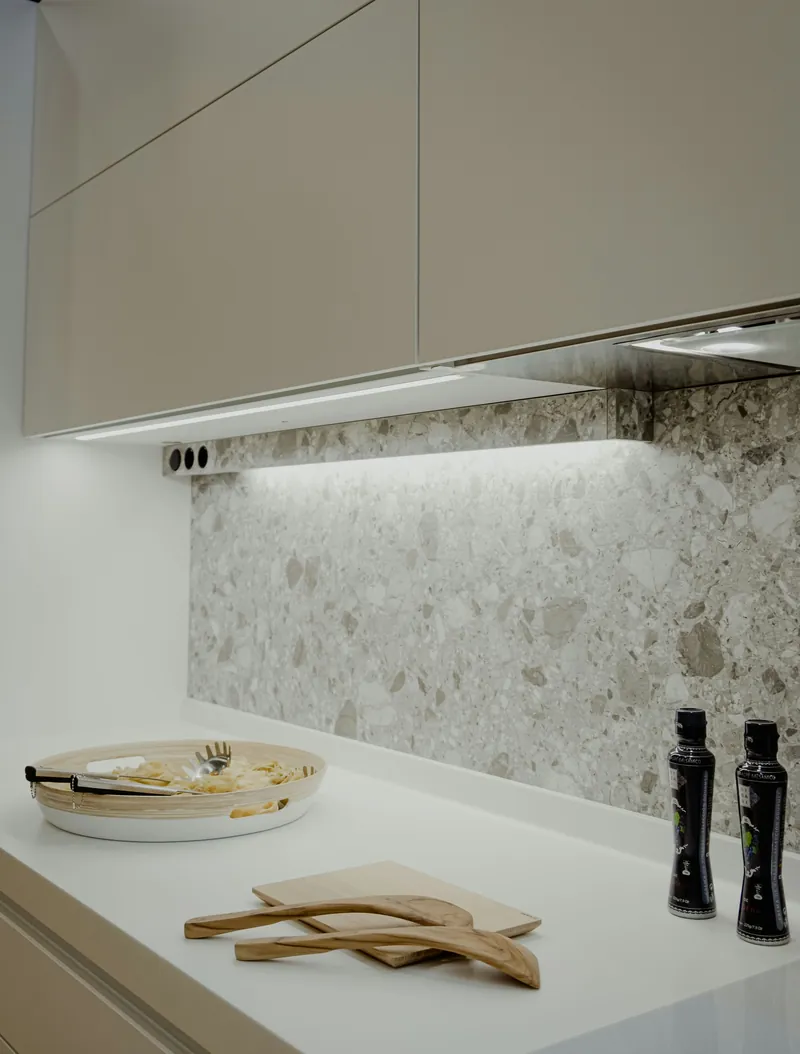
The one thing to plan for: the backsplash. Removing an old counter almost always damages the tile or paint immediately above it, so a counter replacement usually brings a backsplash with it. Doing both together saves a second mobilisation.
Sink and tap are worth replacing at the same time for the same reason — the cutout is being made fresh, so the sink model has to be confirmed before fabrication anyway. See sink and faucet installation.