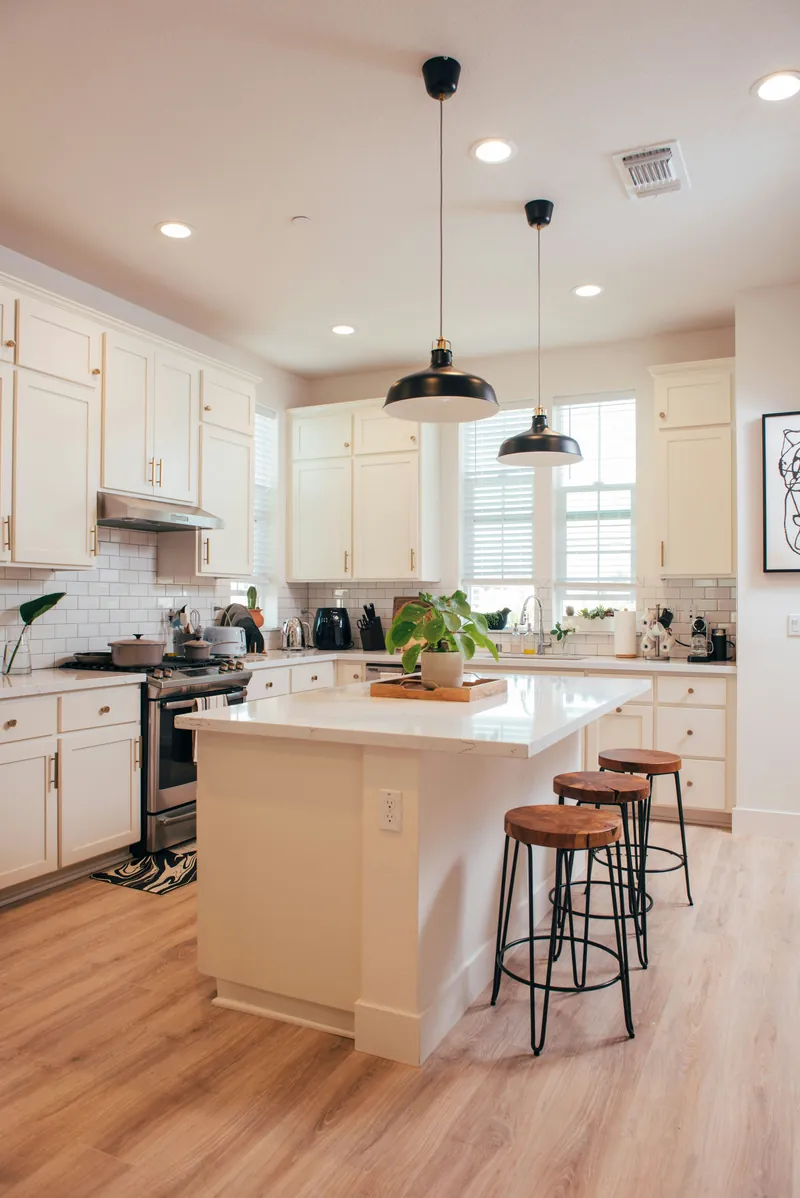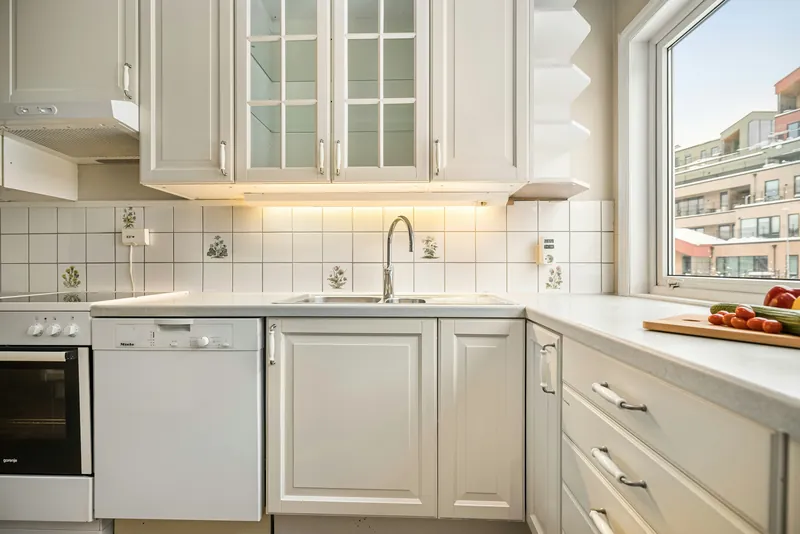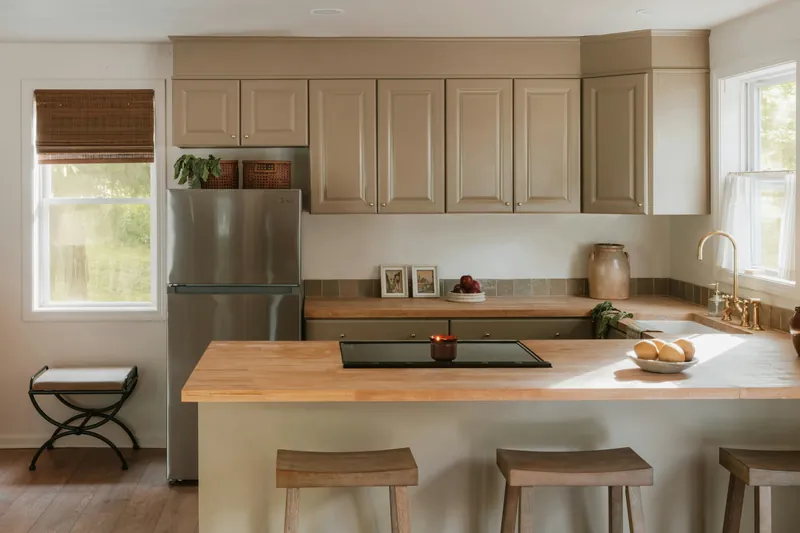
Most of what makes a kitchen look dated is three things: the colour of the doors, the surface of the counters, and the light. Fix those and the room reads as new, even though the boxes, the layout and the floor never moved.
We quote plenty of $60,000 kitchens. We also tell people, regularly, that they do not need one — and that saying so is not costing us anything, because the same people come back and refer their friends.
What can you actually get for $10,000 to $20,000?
For $12,000 to $18,000 in Vancouver you can spray-refinish the existing cabinet doors, replace the countertops with mid-tier quartz, fit a new sink and tap, replace the hardware and add under-cabinet lighting. That combination changes a kitchen more than any other spend at that level.
| Budget (CAD) | What it realistically buys | What stays |
|---|---|---|
| $4,500 – $9,000 | Spray-refinished doors, new hardware, new tap | Counters, floor, layout, appliances |
| $12,000 – $18,000 | The above plus quartz counters, new sink, under-cabinet LED | Boxes, floor, layout |
| $18,000 – $28,000 | Refaced cabinets, quartz, backsplash tile, new flooring | Boxes, layout |
| $28,000 – $40,000 | New stock or entry semi-custom cabinetry, quartz, tile, floor | Layout, plumbing positions |
Every row assumes the layout does not change. Moving the sink or the range is what pushes a budget renovation into a remodel.
The four cheapest changes with the biggest visual return
What we would skip on a tight budget: replacing sound flooring, moving anything plumbed, decorative crown moulding, and a designer tile in a complex pattern where the setting labour costs more than the tile.
- Door colour. Spray refinishing solid wood or MDF doors costs $4,500 to $9,000 and changes the entire room. Brush-painted cabinets look brush-painted; sprayed ones do not.
- Countertops. Replacing laminate with quartz is $3,800 to $9,500 and is the single most noticed surface in a kitchen.
- Hardware. $400 to $1,200 for the whole kitchen. Nothing else gives that ratio of change to cost.
- Under-cabinet lighting. $600 to $1,800. A dark counter reads as an old kitchen no matter what is on it.
When cheap becomes expensive
Three false economies cost more than they save: refacing boxes that are already failing, laminate counters in a kitchen you plan to sell within five years, and skipping an electrical upgrade that the next owner’s home inspection will find anyway.
Open a cabinet door and look at the box. If the particleboard under the sink has swollen, or a shelf sags, or the carcass racks when you push it, then refacing puts $10,000 of new doors onto a structure that is on its way out. That is the one case where spending more now is genuinely cheaper.
The same logic applies to a 60-amp panel. It will not carry an induction range and a modern appliance load, it will be flagged on any home inspection, and it costs the same $2,500 to $6,000 whether you do it now with the walls open or later with them closed.
Phasing a kitchen you cannot afford all at once
Phasing works, and the order matters: countertops and backsplash first (they are independent of everything else), cabinetry second, flooring last. Phasing adds roughly 8 to 12% to the total cost because each phase carries its own mobilisation, protection and cleanup.
The one order that does not work is flooring first. New floor laid before new cabinetry either wastes material running under the boxes or leaves a visible seam when the old cabinet footprint is exposed.
We will write a phased plan into the quote with each stage priced separately, so you can commit to stage one without committing to the rest.